
What Is Cupping
We discussed What To Taste in Coffee in the previous post. This post we get on everything about how to cup coffee, let's get cupping!
We discussed What To Taste in Coffee in the previous post. This post we get on everything about how to cup coffee, let's get cupping!

Cupping is a standardised method to taste coffee. The idea of cupping is to avoid any impact and inconsistency on flavour from the brewing process.
Most importantly, it’s a much easier way to taste lots of coffees all in one go. Imagine coffee buyers who visit coffee farms and they have hundreds of coffees to taste every time. Brewing one by one will take forever to taste all the coffees!
Coffee roasters & professionals cup coffees in their daily routine, mainly for quality control and communication within their team so that everyone knows what coffees they are serving at that point.
We cup lots of coffees on regular basis (Yes, we have more than 10 & often visit our roasters to taste lots of coffees all at once, especially for our Blaq Coffee monthly subscription's coffees!

You can do your own cupping at home too. Just use 12g of coffee (coarse grind) with 200ml of water, then left to steep for 4 mins.
At 4 minutes, use a spoon to break the layer of floating ground on top of the bowl (we called it crust). Don’t forget to put your nose close to it while breaking the crust and smell the delightful aroma! Then skim off all grounds and foam that remain on top of the coffee.
We like to taste coffee at 10-12 mins where the temperature is safe to drink. You can use your finger, an almighty thermometer to touch on the cup. If your finger can hold on to the temperature, you are good to start tasting.
Then use a spoon (preferably soup spoon) to slurp it, or drink it as soup works too.
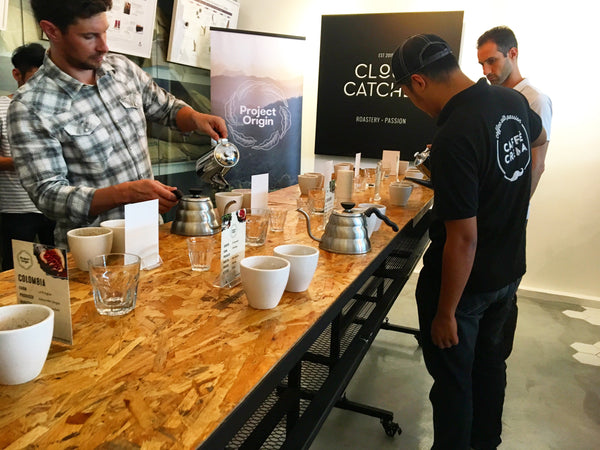
To make cupping interesting, try with 2 or more coffees from different region or processing, eg. African and South American coffees! It much obvious to taste the difference between each coffees.
Also, taste the difference as the coffee cools down. You’ll notice that coffee flavour open up and taste much much better when cools down, especially when you are cupping high-quality coffees (like COE and Gesha coffees).

If possible, we highly recommend doing blind cupping. Our taste perception is easily distracted by information. Blind cupping removed all of it and your palate get fully focus on the taste of coffee.
It's also best to note down everything that you tasted in a piece of paper. Things like mouthfeel, acidity, sweetness etc change as the coffee cools. You can learn about what to taste in coffee here.

Lastly, do cupping with your friends and family, the more the merrier! Make sure you have enough coffee for everyone to taste & set up at least 1 cup per person.
If you have 6 people in a session, you need at least 6 cups in total. You can also put 2 cups of same coffee to taste together (like the photo above).
To make it easy on coffee selection, check out our Taster Pack in 50g small sample size. If you like to do monthly cupping, Blaq Coffee subscription is the best for you!
Happy Cupping!