in Barcelona
· Spain ·
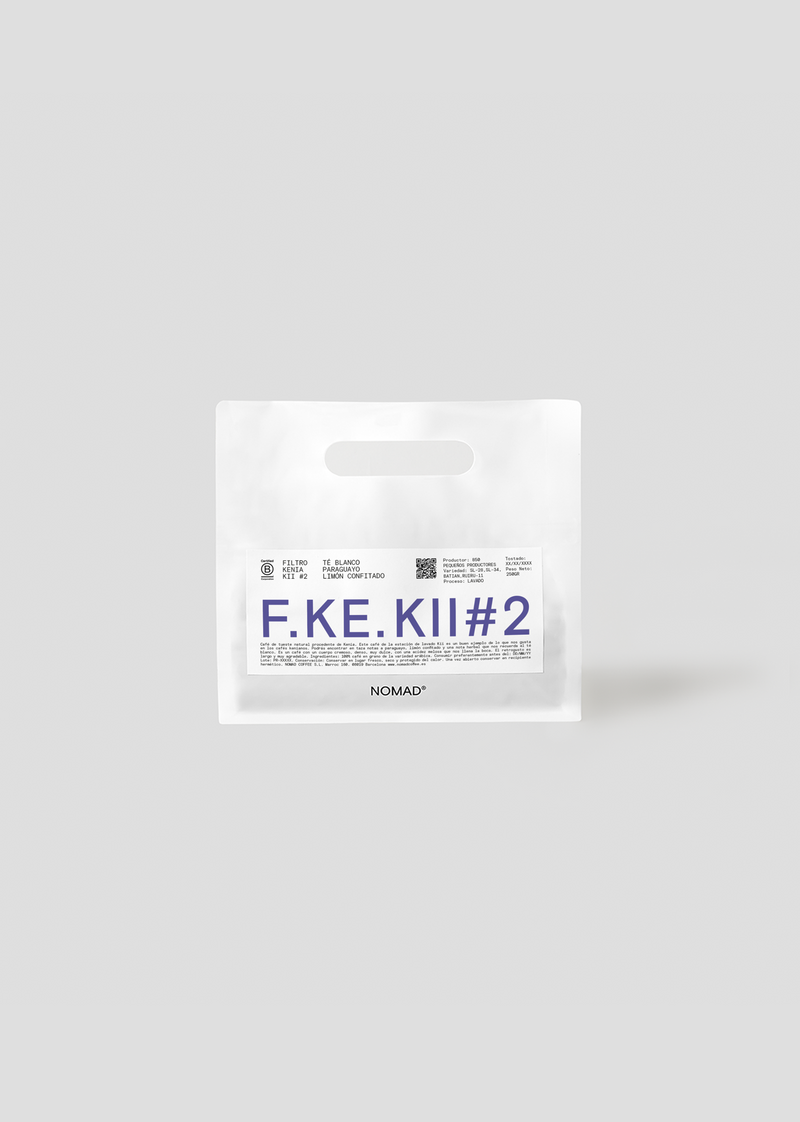
Kenya Kii #2
Citrus·fruity·sweet
Sold out — back with the next roast. Nomad coffees land in small drops. Leave your email and we’ll let you know first.
Imported from Barcelona - we find these beans drink best 2-3 weeks after the roast date
A sweet, creamy Kenyan built for filter brewing
Kenya Kii #2 is a washed single origin from the Kii washing station in the Kibugu district of Kirinyaga, at the foot of Mount Kenya. It is grown by members of the Rungeto Farmers Cooperative Society between 1,310 and 1,900 metres above sea level. This is the filter-line lot from Nomad.
Tasting Notes
White Tea · Flat Peach · Candied Lemon
Dense and creamy, very sweet, carried by a mellow acidity that fills the mouth. Behind the headline notes there is yellow kiwi, flower honey, and pears in syrup.
Coffee Details
| Origin | Kenya |
| Region | Kibugu district, Kirinyaga |
| Washing Station | Kii Washing Station |
| Producer | Rungeto Farmers Cooperative Society |
| Variety | SL-28, SL-34, Batian, Ruiru-11 |
| Processing | Washed |
| Altitude | 1,310–1,900 MASL |
| Harvest | 2024–25 season |
| Line | Filter |
| Tasting Notes | White Tea, Flat Peach, Candied Lemon |
About This Coffee
The Kii washing station was built in 1995 and belongs to the Rungeto Farmers Cooperative Society, a group of more than 850 smallholder growers. Members work modest plots averaging around 250 trees each, on high-altitude plots of rich volcanic soil.
After picking, the cherries are destemmed and left to ferment for somewhere between 16 and 24 hours, with the station adjusting that window according to the ambient temperature. The parchment is then washed using water drawn from the Kii River and soaked for a further 12 hours, a step that refines the acidity and clarity.
Drying happens on raised beds over roughly 14 days, with the parchment covered when temperatures climb and again overnight, so drying stays even. The lot blends the classic Kenyan SL-28 and SL-34 with the more modern Batian and Ruiru-11 varieties.
How to Brew
| Method | Pour Over (V60 / Kalita) |
| Ratio | 1:16 |
| Coffee | 15g, medium-fine grind |
| Water | 240g |
| Water Temperature | 94°C |
| Total Brew Time | 2:45–3:00 |
Our house starting point — these are our own figures, not Nomad's.
Start with a 45g bloom for 40 seconds, then pour in two or three even stages. If the cup tastes thin or sour, grind a little finer or nudge the water hotter; if it turns drying or bitter, go coarser.
How Much Coffee Is in a Bag?
A 250g bag makes roughly 16 cups of filter coffee at 15g per cup. Brewing one cup a day, that is about two weeks of morning coffee from a single bag.
Frequently Asked Questions
Is it better for espresso or filter?
Filter. This is the filter-line lot from Nomad, so pour over, batch brew and immersion methods are the natural fit.
What does it taste like?
White tea, flat peach and candied lemon, over a creamy and dense body. It is very sweet, with a mellow acidity.
How fresh is the coffee?
Nomad roast in Barcelona and we ship on arrival. In our experience the beans are drinking at their best around 2-3 weeks past the roast date.
What does washed processing mean?
Washed processing removes the fruit pulp from the bean before drying, then ferments and rinses the parchment in water. Because the fruit is not left in contact with the bean, the cup tastes cleaner and more transparent — you taste the farm and the variety rather than added fruity sweetness.
New to specialty coffee and not sure where to start? Try our Taster Box to sample across origins. Brewing for a team? Take a look at our Office & Bulk Coffee. Free shipping within Peninsular Malaysia on orders over RM80 (RM150 for East Malaysia).
Brew it the Barcelona way
Filter / pour-over
- Ratio
- 60 – 70 g / L
- Grind
- Medium-fine
- Scale
- Weigh coffee & water
- Water
- 92 – 94 °C
Use a digital scale for both coffee and water. 60–70 g per litre depending on method, water and taste.