in Barcelona
· Spain ·
Ecuador Kafipamba
Citrus·floral·sweet
Sold out — back with the next roast. Nomad coffees land in small drops. Leave your email and we’ll let you know first.
Imported from Barcelona — we find these beans drink best 2–3 weeks after the roast date
A sweet, tropical coffee with melon and panela — Nomad's espresso-line lot
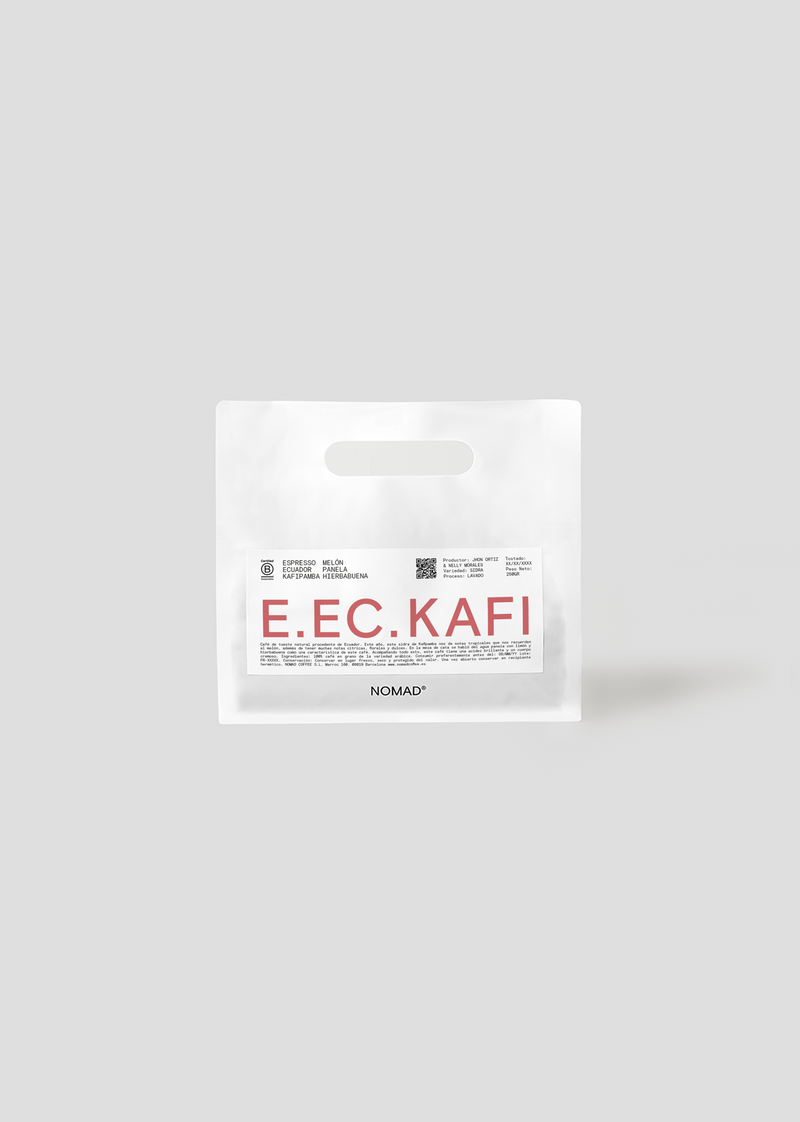
Ecuador Kafipamba is a washed single origin from the Kafipamba farm in Ecuador, grown by Jhon Ortiz and Nelly Morales at 1,345 metres above sea level. It is the Cider variety from the 2025 harvest, roasted by Nomad in Barcelona. Nomad lists it under the Espresso name, so espresso is where we start.
Tasting Notes
Melon · Panela · Spearmint
Nomad describes a bright acidity and a creamy body. Alongside the tropical melon there is citrus and floral character, and a lot of sweetness.
Coffee Details
| Origin | Ecuador |
| Farm | Kafipamba |
| Producer | Jhon Ortiz and Nelly Morales |
| Variety | Cider |
| Processing | Washed |
| Altitude | 1,345 masl |
| Harvest | 2025 |
| Line | Espresso line |
| Tasting Notes | Melon, Panela, Spearmint |
About This Coffee
Kafipamba is a farm that changed course. Jhon Ortiz and Nelly Morales worked in cattle ranching before deciding, in 2021, to take the leap into specialty coffee.
In 2024, through Nomad's teamwork with Makicuna, the farm put in essential improvements — new drying tables, along with specialised technical consulting.
The processing is careful. Cherries are sorted by flotation, then fermented for 24 hours in plastic tanks before being pulped and washed. Drying is done slowly, outdoors on raised African beds shaded by canopies, until the coffee settles at 11% moisture.
How to Brew
| Method | Espresso |
| Ratio | 1:2 |
| Coffee | 18g |
| Water | 36g out |
| Water Temperature | 93°C |
| Total Brew Time | 26–30 seconds |
Our house starting point — these are our own figures, not Nomad's.
Start at 18g in and 36g out in about 28 seconds, then adjust from there. If the shot tastes sharp or thin, grind finer or pull a little longer to bring out the panela sweetness. If it turns bitter or dries your tongue, grind coarser or drop the temperature by a degree. It is worth tasting the shot straight before you put it in milk — the melon and mint are easier to spot without dairy.
How Much Coffee Is in a Bag?
A 250g bag gives you roughly 14 double espressos at an 18g dose — about two weeks of a daily flat white, or a good weekend of dialling in and experimenting.
Frequently Asked Questions
Is this better for espresso or filter?
Nomad sells this as its espresso-line lot, so the machine is where we would start. It will still brew as filter if that is what you have — go coarser and a little cooler.
What does it actually taste like?
Melon, panela and spearmint, with citrus and floral notes behind them. Nomad describes the cup as having a bright acidity and a creamy body.
How fresh will my coffee be?
These beans are roasted by Nomad in Barcelona and imported to Malaysia, so they arrive having already rested. In our experience they are drinking at their best around 2–3 weeks past the roast date, which lines up well with when they reach you.
What does “washed” processing mean?
The fruit is removed from the bean before drying. Here the cherries are fermented for 24 hours, pulped, washed clean and then dried slowly on raised beds. Washed coffees taste cleaner and more transparent than naturals — you get the character of the variety and the farm rather than heavy fermented fruit.
New to single origins? Try a Taster Box to find your profile first. Brewing for a team? See our Office & Bulk Coffee. Free shipping within Peninsular Malaysia on orders over RM80 (RM150 East Malaysia).
Brew it the Barcelona way
Espresso
- Dose
- 18 – 19 g
- Yield
- 35 – 38 g
- Time
- 25 – 35 s
- Water
- 93 – 94 °C
Precision baskets (18–22 g) are easier to extract properly, with noticeably more sweetness in the cup.