in Barcelona
· Spain ·
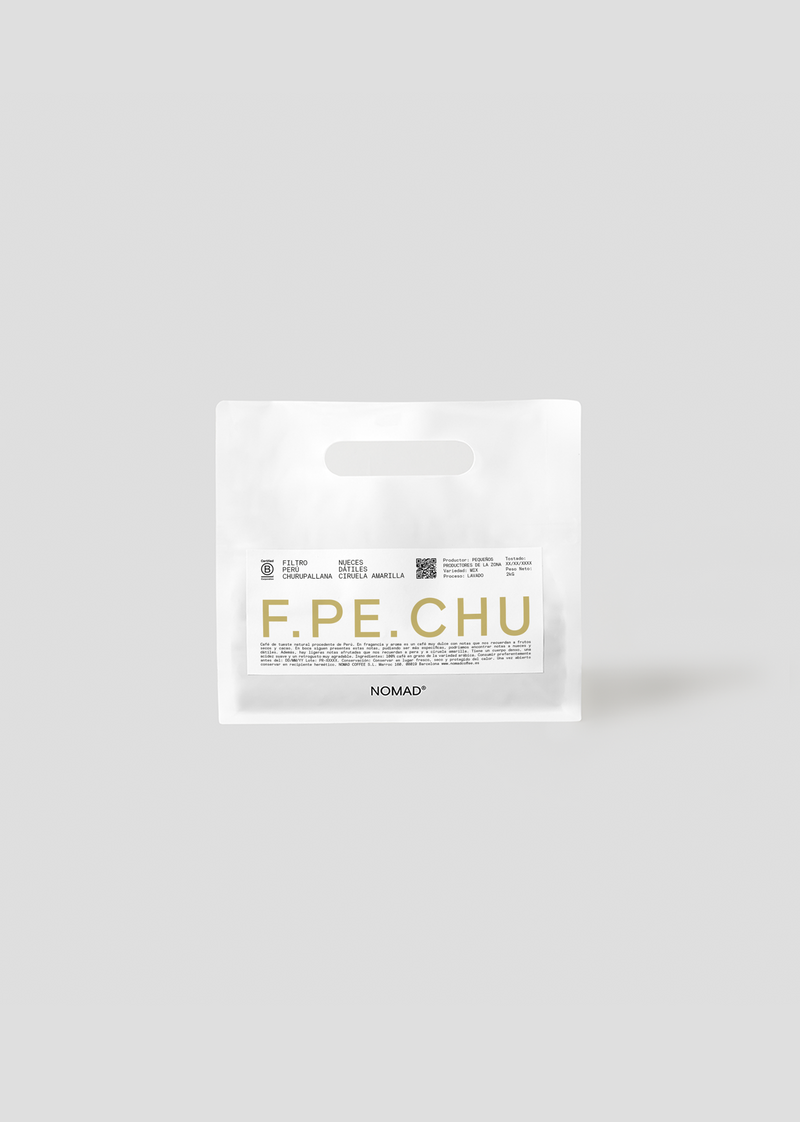
Peru Churupallana
Fruity·sweet
Sold out — back with the next roast. Nomad coffees land in small drops. Leave your email and we’ll let you know first.
Imported from Barcelona — we find these beans drink best 2–3 weeks after the roast date
A sweet, nutty washed Peru built for everyday filter brewing
Peru Churupallana is a washed single origin from the Monobamba valley in Peru, grown between 1,800 and 2,000 metres above sea level where the Amazon rainforest climbs into the Andes. It comes from the 2025/26 harvest and is made up of a mix of varieties. This is the filter-line lot from Nomad, roasted in Barcelona.
Tasting Notes
Nuts · Dates · Yellow Plum
A very sweet coffee. Nomad puts the aroma at nuts and cocoa, with walnut and dates coming through on the palate, and fruit notes of pear and yellow plum. Full body, mild acidity, and what Nomad calls a very pleasant aftertaste.
Coffee Details
| Origin | Peru |
| Region | Monobamba Valley |
| Variety | Mix |
| Processing | Washed |
| Altitude | 1,800–2,000 masl |
| Harvest | 2025/26 |
| Line | Filter line |
| Tasting Notes | Nuts, Dates, Yellow Plum |
About This Coffee
Monobamba means Plain of Desire in Quechua, which suits a place this striking. The valley sits in the ecosystem Peruvians call the Ceja de Selva, where the Amazon rainforest runs into the eastern slopes of the Andes. Coffee grows here between 1,800 and 2,000 metres.
The valley has had a hard run — leaf rust tore through it across 2012 and 2013 and took a serious bite out of production. The importer Cultivar has worked alongside the local communities since 2016, treating better post-harvest technique as the route to better cups. Dula Julcarima, among the country's first certified Q-Graders, coordinates quality across the region and runs the extended fermentation trials that keep pushing lots like this one along.
Processing is classic washed, done carefully. Only ripe cherries come off the tree. Those go through the pulper and then sit in concrete tanks for around 18 hours while fermentation loosens the last of the fruit. A clean-water rinse follows, and the beans finish up on raised African beds, where air can move underneath and keep the drying even.
How to Brew
| Method | Pour over (V60 or similar) |
| Ratio | 1:16 |
| Coffee | 15g, medium-fine grind |
| Water | 240g |
| Water Temperature | 93°C |
| Total Brew Time | 2:45 – 3:15 |
Our house starting point — these are our own figures, not Nomad's.
Start with a 45g bloom and give it 30 seconds, then pour in two or three even stages. If the cup tastes thin or a little sour, grind finer or push the water to 94°C. If it turns bitter or drags past three and a half minutes, coarsen the grind slightly. Treat these numbers as a starting point and adjust to your taste.
How Much Coffee Is in a Bag?
A 250g bag gives you roughly 16 cups of filter coffee at a 15g dose — about two weeks of brewing if you make one cup a day, which lines up nicely with the freshness window. Pulling it as espresso instead, at 18g a shot, you get around 14 doubles.
Frequently Asked Questions
Is it better for espresso or filter?
This is Nomad's filter-line lot, so pour over, batch brew and immersion are where we would point you first. Nomad does offer an espresso grind for it as well, so it is not off-limits either way.
What does it taste like?
Walnut, cocoa and dates, with pear and yellow plum underneath. A very sweet cup with mild acidity and a full body — easy to drink black, every day.
How fresh is the coffee?
Nomad roast in Barcelona and we ship on arrival, so these beans are not roasted locally. In our experience they are drinking at their best around 2–3 weeks past the roast date.
What does washed processing mean?
The fruit comes off the bean before drying. Here that means pulping the cherry, letting the coffee sit in tanks for about 18 hours so fermentation breaks down the mucilage that is left, then rinsing it clean and drying it on raised beds. Taking the fruit off early is why washed coffees read cleaner and more transparent than naturals — you taste the bean and the place rather than heavy fermented fruit.
New to specialty coffee and not sure where to start? Try the Taster Box to find your profile first. Brewing for a team? Take a look at our Office & Bulk Coffee. Free shipping within Peninsular Malaysia on orders over RM80 (RM150 for East Malaysia).
Brew it the Barcelona way
Filter / pour-over
- Ratio
- 60 – 70 g / L
- Grind
- Medium-fine
- Scale
- Weigh coffee & water
- Water
- 92 – 94 °C
Use a digital scale for both coffee and water. 60–70 g per litre depending on method, water and taste.