in Barcelona
· Spain ·
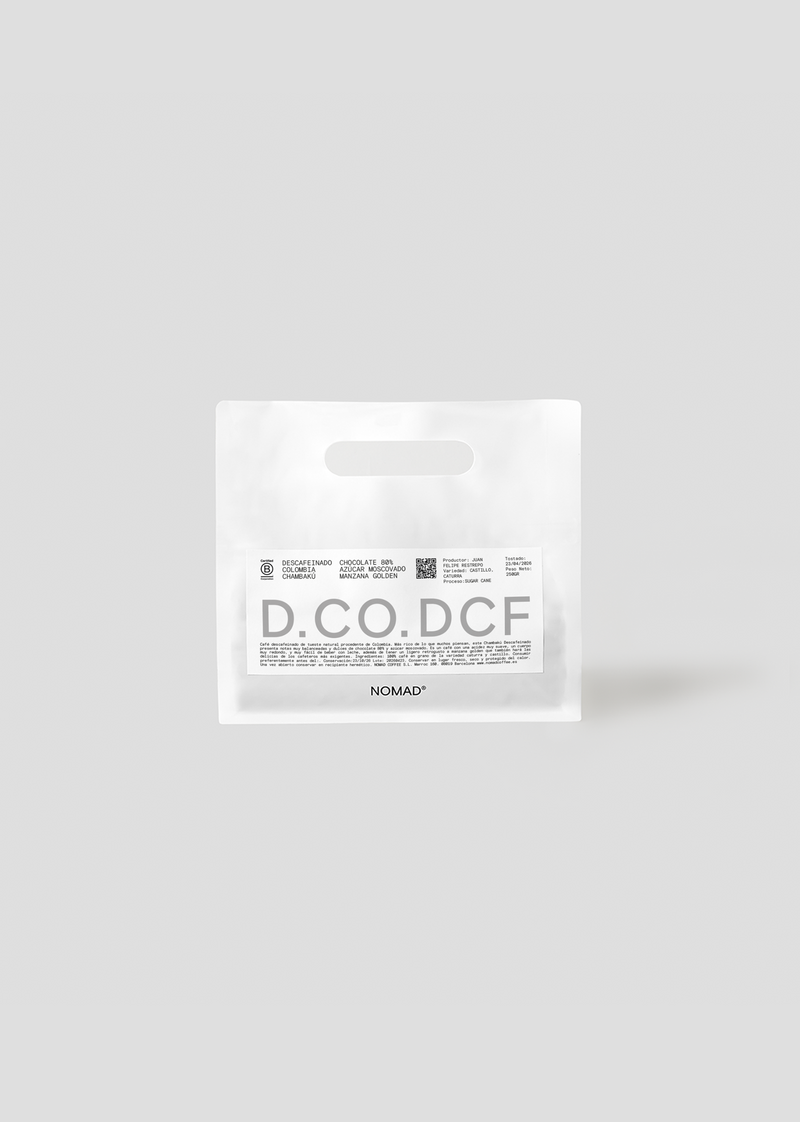
Colombia Chambakú Decaf
Caramel·chocolate·fruity·sweet
Sold out — back with the next roast. Nomad coffees land in small drops. Leave your email and we’ll let you know first.
Imported from Barcelona — we find these beans drink best 2–3 weeks after the roast date
A decaf with real depth — dark chocolate and muscovado sugar, built for filter brewing
Colombia Chambakú Decaf is a washed single origin from Finca Chambakú in Colombia, grown by producer Felipe Restrepo at 1,400–1,700 metres above sea level. The caffeine is removed using high-mountain spring water and ethyl acetate derived from sugarcane molasses, a gentle route that leaves the sweetness and body of the coffee intact. If you have written decaf off as thin and papery, this is the lot that changes your mind.
Tasting Notes
80% Chocolate · Muscovado Sugar · Golden Delicious Apple
Very mild acidity with a round, full body and a clean, sweet finish carrying a slight golden apple aftertaste. It stands up well to milk.
Coffee Details
| Origin | Colombia |
|---|---|
| Farm | Finca Chambakú |
| Producer | Felipe Restrepo |
| Variety | Castillo |
| Processing | Washed, then decaffeinated with sugarcane ethyl acetate and spring water |
| Altitude | 1,400–1,700 MASL |
| Harvest | 2024 |
| Tasting Notes | 80% Chocolate, Muscovado Sugar, Golden Delicious Apple |
About This Coffee
Finca Chambakú is one of the farms Nomad comes back to season after season rather than a one-off purchase. This particular harvest came from Felipe Restrepo, who did not simply hand over the same coffee as last year — he took the opportunity to rebuild how the lot is handled after picking.
The biggest change was drying. Felipe moved the farm over to mechanical silos, and the difference shows up in the cup. Controlled drying gives the green coffee far more consistency batch to batch, extends how long it holds its character in storage, and produces a noticeably more expressive brew than the farm was turning out before.
Decaffeination happens with high-mountain spring water and ethyl acetate sourced from sugarcane molasses — the same compound that occurs naturally in yellow fruit such as bananas. The process pulls out a minimum of 97% of the caffeine and leaves no more than 20 PPM of solvent residue, with the beans finishing at 11% moisture. Because it is sugar-derived rather than harshly chemical, the sweetness that makes this coffee worth drinking survives the treatment.
How to Brew
| Method | Pour over (V60) |
|---|---|
| Ratio | 1:16 |
| Coffee | 15g, medium-fine grind |
| Water | 240ml |
| Water Temperature | 94°C |
| Total Brew Time | 2:45 |
Our house starting point — these are our own figures, not Nomad's.
Start with a 45ml bloom for 30 seconds, then pour in two even stages. Decaffeinated beans are a little more porous than regular coffee and tend to extract faster, so if the cup tastes hollow or drying, grind a touch coarser or drop the water to 92°C before you change anything else. This lot is also forgiving in a French press or Moccamaster if you would rather not hand-brew.
How Much Coffee Is in a Bag?
A 250g bag gives you roughly 16 cups of filter coffee at our 15g recipe — around two weeks of a daily brew, which lines up neatly with the window where these beans taste their best.
Frequently Asked Questions
Is it better for espresso or filter?
Filter. We list it as a light roast for pour over, batch brew and French press, where the chocolate and muscovado sweetness have room to open up. It will pull as espresso, but filter is where this lot is happiest.
What does it taste like?
80% chocolate and muscovado sugar up front, with a slight golden apple note on the finish. Acidity is very mild and the body is round and full, so it is an easy cup black and it holds its own with milk.
How fresh is the coffee?
Nomad roast these beans in Barcelona and we import them. In our experience they are drinking at their best around 2–3 weeks past the roast date.
What does washed processing mean?
The fruit is stripped from the bean and the remaining sticky mucilage is fermented and washed off with water before drying. It is the cleanest of the processing methods: nothing from the fruit is left to ferment into the bean, so what you taste is the coffee itself — clarity, structure and sweetness rather than the boozy, jammy character you get from naturals.
New to us and not sure where to start? Try the Taster Box. Keeping a team caffeinated — or in this case not — is easier with Office & Bulk Coffee. Free shipping within Peninsular Malaysia on orders over RM80 (RM150 for East Malaysia).
Brew it the Barcelona way
Filter / pour-over
- Ratio
- 60 – 70 g / L
- Grind
- Medium-fine
- Scale
- Weigh coffee & water
- Water
- 92 – 94 °C
Use a digital scale for both coffee and water. 60–70 g per litre depending on method, water and taste.