in Barcelona
· Spain ·
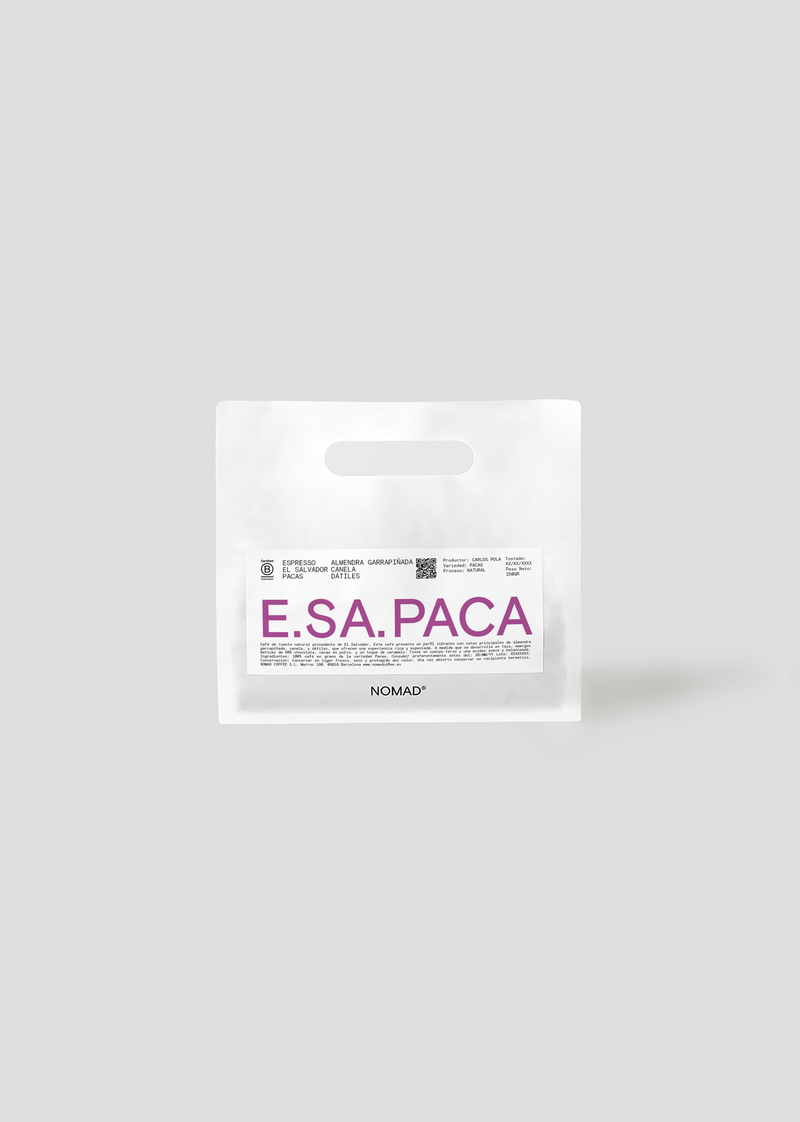
El Salvador Pacas
Caramel·chocolate·sweet
Sold out — back with the next roast. Nomad coffees land in small drops. Leave your email and we’ll let you know first.
Imported from Barcelona — we find these beans drink best 2–3 weeks after the roast date
The espresso-line lot from Barcelona — caramelised almonds, cinnamon and dates
El Salvador Pacas is a natural-process single origin grown by Carlos Pola at Finca Las Brisas, above Juayúa in El Salvador's Apaneca-Ilamatepec mountain range. It is the Pacas variety, grown between 1,250 and 1,300 metres and picked in the 2025 harvest. This is the espresso-line lot from Nomad, roasted in Barcelona — caramelised almonds, cinnamon and dates up front, with 80% chocolate and cocoa powder as the cup opens out.
Tasting Notes
Caramelised Almonds · Cinnamon · Dates
Smooth body with a mild, balanced acidity. As the cup develops it moves towards cocoa powder and 80% chocolate, with a hint of caramel. Nomad sum it up as rich and spicy.
Coffee Details
| Origin | El Salvador |
| Region | Juayúa, Apaneca-Ilamatepec mountain range |
| Farm | Finca Las Brisas |
| Producer | Carlos Pola |
| Variety | Pacas |
| Processing | Natural |
| Altitude | 1,250–1,300 masl |
| Harvest | 2025 |
| Line | Espresso line |
| Tasting Notes | Caramelised almonds, cinnamon, dates |
About This Coffee
Finca Las Brisas sits above the town of Juayúa, on the slopes of the Apaneca-Ilamatepec range in western El Salvador. Carlos Pola farms here between 1,250 and 1,300 metres. He is the fifth generation of his family to work the land, though he came to coffee late — two decades in the textile industry first, before moving across to it full time in 2012. This lot is the Pacas variety, off the trees in the 2025 harvest.
The processing is natural. Cherries are first floated to sort them, then held in sacks in the shade for two days to begin dehydrating. From there they go out onto drying beds — two days under the sun, then back into the shade to finish.
Nomad roast it in Barcelona and we import it to Malaysia from there. It is never roasted in Kuala Lumpur.
How to Brew
| Method | Espresso |
| Ratio | 1:2 |
| Coffee | 18g |
| Water | 36g liquid espresso out |
| Water Temperature | 93°C |
| Total Brew Time | 26–30 seconds |
Our house starting point — these are our own figures, not Nomad's.
Start at 18g in and 36g out in about 28 seconds, then adjust to taste. If the shot tastes thin or sour, grind finer to slow the flow; if it turns bitter or drying, grind coarser.
How Much Coffee Is in a Bag?
A 250g bag gives you roughly 14 double espressos at an 18g dose. Brewed as filter at 15g a cup, it works out closer to 16 cups per bag.
Frequently Asked Questions
Is this better for espresso or filter?
Nomad list it under their espresso line, so that is where we would start — as a straight shot. Nothing stops you brewing it as filter if you prefer; the caramelised almond, cinnamon and date notes are there either way.
What does it taste like?
Caramelised almonds, cinnamon and dates up front, moving towards cocoa powder and 80% chocolate as the cup develops, with a hint of caramel. The body is smooth and the acidity mild and balanced, so it reads sweet and nutty rather than sharp.
How fresh is the coffee?
Nomad roast in Barcelona and we ship on arrival, so these beans are not roasted in Kuala Lumpur. In our experience the beans are drinking at their best around 2–3 weeks past the roast date.
What does natural processing mean?
In natural processing the whole coffee cherry is dried with the fruit still on the bean, instead of the fruit being washed off first. The bean stays in contact with the drying pulp and takes on more of its sugars, which is why naturals typically taste sweeter and heavier with more dried-fruit character. For this lot the cherries were floated to sort them, rested in sacks in the shade for two days, then dried on beds: two days in the sun before finishing in the shade.
New to us? Sample across the range with a Taster Box, or keep the team caffeinated with Office & Bulk Coffee. Free shipping within Peninsular Malaysia on orders over RM80 (RM150 for East Malaysia).
Brew it the Barcelona way
Espresso
- Dose
- 18 – 19 g
- Yield
- 35 – 38 g
- Time
- 25 – 35 s
- Water
- 93 – 94 °C
Precision baskets (18–22 g) are easier to extract properly, with noticeably more sweetness in the cup.